

<img height="1" width="1" style="display:none;" alt="" src="https://px.ads.linkedin.com/collect/?pid=6948386&amp;fmt=gif">
Skip to content
The ARKK Automation Platform- Website Slider-2

Bank of England Reporting
Made Simple

Regulatory returns, prepared and validated with confidence,
across banking, insurance and statistics.

The ARKK regulatory reporting portal handles the end-to-end Bank of England reporting process for banks, insurers and financial institutions, converting your data into compliant XBRL and filing returns direct to the BEEDS portal. Built-in validations check every submission against the latest taxonomy before it leaves your desk.

Firms still relying on spreadsheets or disconnected tools for regulatory returns face avoidable risk. Manual processes are prone to error, slow to scale, and leave teams exposed to rejected returns and non-compliance as reporting requirements evolve.

How ARKK simplifies Bank of England reporting

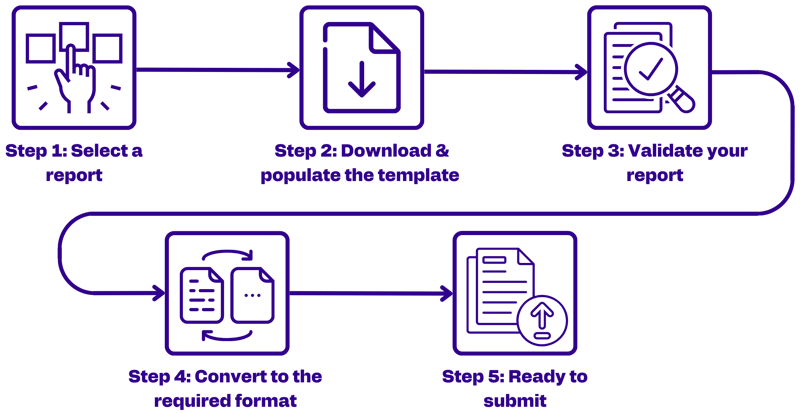
The ARKK portal aggregates your regulatory data, runs it through embedded validation logic, and produces recognised, submission-ready returns with a full audit trail. As a Bank of England Recognised Software House, we give your team clear visibility across every module and reporting cycle.

Diagram showing the five-step Bank of England reporting process on the ARKK portal: select, download, validate, convert and submit.

Why businesses choose ARKK for Bank of England reporting

Trusted by over 65% of FTSE companies, here's why businesses worldwide choose ARKK.

TOUCH
Speed icon
Save time
Save time

Connect existing workbooks and use roll-forward to carry data across submissions, reducing prep time.

TOUCH
Value icon
Maximise value
Maximise value
Manage banking, insurance and statistical returns in one recognised portal, so your team gets more done.
TOUCH
Adaptable and flexible Icon
Eliminate errors
Eliminate errors
The regulators' consistency checks are embedded into the software, flagging issues before submission and reducing the risk of rejected returns.
TOUCH
Risk icon
Gain security
Gain security
Our ISO 27001 certified portal keeps every return secure from upload through to submission, with full control over who can access your data.
TOUCH
Approved icon white
Stay compliant
Stay compliant
Taxonomy updates and regulatory changes are handled behind the scenes, keeping returns aligned with the latest Bank of England requirements.
TOUCH
Plan icon-1
Plan ahead
Plan ahead

Expert support, extra hours and short SLAs around deadlines mean you can approach each reporting cycle with confidence.

Streamline Bank of England Reporting with ARKK

Partner-backed expertise

ARKK works alongside a global network of advisory firms, giving you access to specialist expertise alongside our own reporting experience when you need it.

Learn why businesses trust ARKK for Bank of England reporting

Your dedicated Customer Success team provides expert guidance throughout onboarding and hands-on support around every reporting deadline.

The information that came back from ARKK was so clear and transparent.

Kreeson Thatiha, Head of Finance and Client Money, eToro

eToro

I was continually reassured of ARKK's technology and their commitment to customer service.

Darryl Alford, Finance Manager, DPD

DPD logo

ARKK were prepared to be more flexible with how we worked and how we were set up.

Alistair McClelland, Head of Tax, The University of Edinburgh

UOE blue

Simply outstanding service and a real pleasure to work with.

Chris Parsons, Production Director, Radley Yeldar

RY

ARKK are extremely responsive and supportive partners.

Janette Moriarty, Group Financial Reporting Director, Kerry Group

Kerry Group

ARKK are invaluable to us… I wouldn't consider another project without them.

Valentin Ramousse, Head of International Business Development & Partner, Emperor Works

Emperor

The speed and accuracy of implementation was incredible.

Akash Kalaiya, EMEA Tax Manager, Universal Weather and Aviation

UA

Request a demo

Let's discuss how ARKK can streamline your Bank of England reporting process.

Complete the form and our team will be in touch.

Bank of England Reporting FAQs

+ What is Bank of England reporting?

Bank of England reporting refers to the regulatory returns that banks, insurers and other financial institutions must submit to the Bank of England and the Prudential Regulation Authority (PRA). These returns cover areas such as capital, liquidity, solvency and statistical data, helping regulators monitor the stability and resilience of the UK financial system.

+ How does ARKK support Bank of England compliance?

As a Bank of England Recognised Software House, ARKK supports banking, insurance and statistical returns across a wide range of modules, from PRA101 to PRA110 and LVR001 through to Solvency II reporting. The regulators' consistency checks are embedded into the software, so every return is validated before submission.

+ How long does it take to implement a Bank of England reporting solution?

Implementation timelines depend on the modules you need and the complexity of your data, but ARKK's portal is designed to get you operational quickly. Our team handles taxonomy setup and onboarding, with extra support and short service level agreements (SLAs) available around reporting deadlines.

+ Does ARKK integrate with existing data systems?

Yes. You can link data directly from your existing workbooks to ARKK templates, cutting the time it takes to prepare returns to the absolute minimum. Roll-forward carries data across submissions, so there's no need to re-key information into new templates each cycle.

+ How is data secured on the ARKK platform?

ARKK's portal is ISO 27001 certified, giving you a single, secure destination for uploading, tracking and accessing your files. Your regulatory data stays protected throughout the preparation and submission process.

+ What are the risks of managing Bank of England reporting manually?

Manual reporting is time-consuming and prone to error, particularly across multiple modules and reporting frequencies. Spreadsheet-based processes increase the risk of miscalculations, missed validations and rejected returns, leaving teams exposed to non-compliance as requirements evolve.